
Ceramic coating raises a few common questions. What is it? How long does it last? Is it worth it for a car that isn't new? This post covers what a ceramic coating is, how we apply it, what the two Gtechniq options mean, and how to look after it once it's on.
What a ceramic coating is
A ceramic coating is a liquid that is applied to your car's paint by hand. As it cures, it bonds to the clear coat and forms a thin, hard, glass-like layer. That layer sits between your paint and everything the road throws at it.
It is not a wax and it is not a sealant. Wax sits on top of the paint and wears away in weeks. A sealant bonds more strongly and lasts longer, but it is still a short-term product. A properly applied coating is designed to last years, which is why the products we use come with long guarantees.
Once your car is coated, you notice four things:
- Gloss. The paint looks deeper and wetter, because the surface is smooth and clear.
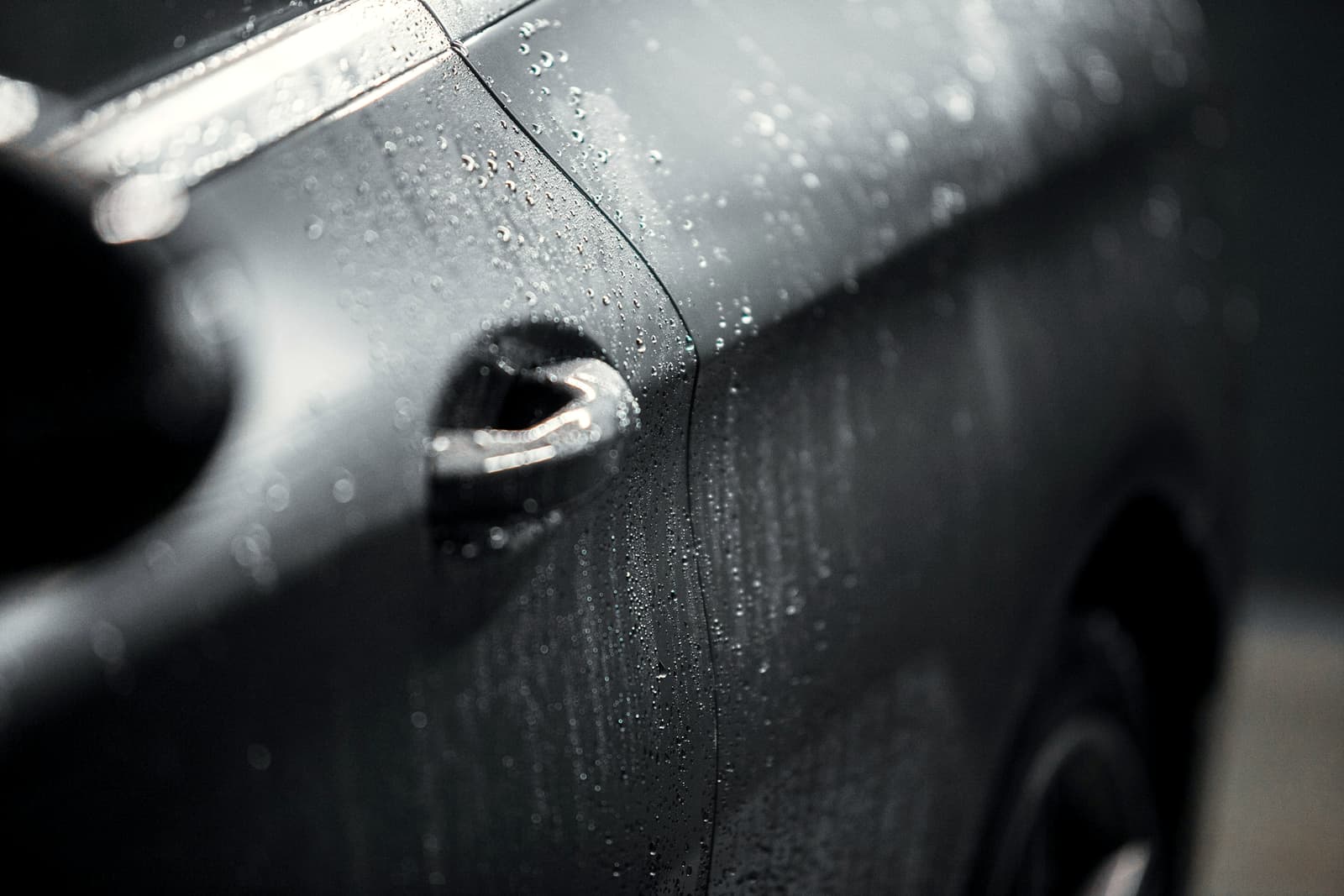
- Water behaviour. Water beads up and runs off instead of sitting in sheets.
- Easier washing. Dirt, salt film and road grime have less to grip, so they rinse off with less effort.
- Protection. The coating takes the UV, the salt and the chemical attack from droppings and sap, instead of your clear coat.
Why it suits Central Coast cars
Salt air, strong summer UV, gum sap and bird droppings all wear on unprotected clear coat, and a coating takes those hits instead. We cover each of these in more detail in our guide to looking after your car on the Central Coast.
Gtechniq Crystal Serum Light or Crystal Serum Ultra
We are accredited to apply Gtechniq coatings, and we offer two of them. Both are applied the same way. The main difference is the guarantee.
Crystal Serum Light carries a 5-year guarantee and suits most daily drivers. Crystal Serum Ultra carries a 9-year guarantee, the longest we offer, and suits a car you plan to keep for a long time or one that lives outdoors. Both packages include a full decontamination wash, a paint correction polish, the coating and coated wheel faces, and prices vary by vehicle size. Our ceramic coating page compares the two in more detail and shows the current price for each size.
Our process, step by step
A coating locks in whatever is underneath it. If there are swirls, water spots or bonded grime on the paint, the coating seals them in for years. That is why most of the work in a ceramic coating job is preparation, and why we always follow the same order.
1. Decontamination
We start with a snow foam pre-wash and a two-bucket hand wash. Then we decontaminate the paint chemically and mechanically. Iron fallout remover dissolves the tiny metal particles from brake dust that embed in the paint. A clay bar lifts tar, sap and anything else that is bonded to the surface. Cars kept near the coast often carry salt film and old gum sap as well, and these have to come off too. By the end, the paint should feel perfectly smooth under your hand.
2. Paint correction
Next comes a machine polish. This removes a very thin layer of clear coat to take out light swirl marks, haze and minor marks, and to bring up the gloss. How much correction your car needs depends on its age and how it has been washed. A new car usually needs a light polish. A car that has been through brush washes for years needs more.
3. Coating
Once the paint is corrected and wiped clean, we apply the Gtechniq coating by hand, one panel at a time. We level each panel so the finish is even and free of high spots. Then we coat the wheel faces, which makes brake dust far easier to clean off. The car stays inside so the coating can set in clean, dry conditions; it finishes curing over the next 7 days.
How long your car stays with us
A ceramic coating keeps your car in our workshop for 1–2 days. Crystal Serum Light jobs sit at the shorter end, and Crystal Serum Ultra takes longer. Drop your car off at a time that suits you during opening hours, and we'll let you know when it's ready.
This is also why we don't apply coatings as a mobile service. A coating applied in a driveway, in the wind and dust, with no time to set under cover, won't perform the way it should.
Aftercare
The coating does a lot of the work, but how you wash your car decides how well it lasts. The rules are simple.
- Don't wash the car for 7 days. The coating is still curing for the first week. If it rains or the car gets dusty, leave it.
- After that, use a pH-neutral shampoo. Harsh detergents and degreasers wear coatings faster. A pH-neutral car shampoo cleans without attacking the coating.
- Wash by hand. Use the two-bucket method and a clean microfibre mitt. Avoid automatic brush washes, which drag grit across the paint.
- Rinse off salt and droppings early. After a beach trip, rinse the car, including the wheels and lower panels. Lift droppings and sap with water and a soft cloth, without scrubbing.
- Dry with a clean microfibre towel. It stops water spots forming as the car dries in the sun.
If you'd rather not wash it yourself, our one-hour Express Wash uses snow foam, the two-bucket method and a chamois dry, which is a safe way to wash a coated car.
How to tell your coating is working
A healthy coating is easy to spot. After rain or a rinse, water forms tight, round beads or runs off the panels in sheets. Dirt rinses away without much effort, and the paint feels slick when it is clean.
If water starts to sit flat on the paint, the coating is usually not gone. More often it is covered by a film of traffic grime, salt or old product from a cheap wash. A thorough hand wash with a pH-neutral shampoo usually brings the beading back. If it doesn't, call us on 02 4325 5000.
Common mistakes after coating
Most problems with coatings come down to a few habits.
- Washing too soon. The coating is still curing for the first 7 days. Washing in that window can affect how well it bonds.
- Using the wrong products. Dishwashing liquid, strong degreasers and harsh wheel cleaners wear coatings faster. Stick to a pH-neutral shampoo.
- Going through a brush wash. The brushes drag grit across the paint and leave swirls, coating or not.
- Drying with a dirty towel. A towel that has been dropped on the ground will scratch. Use a clean microfibre towel every time.
- Leaving droppings in the sun. A coating buys you time, but it is still best to lift droppings within a day or two.
What a coating won't do
A coating is a hard, thin layer, but it is still thin. It won't stop stone chips, and it won't stop deep scratches, dents or car park dings. If stone chips are your main worry, the product that addresses them is paint protection film (PPF), which is a thick clear film. We don't fit PPF. We explain the difference in more detail in our post on paint protection for your car.
A coating also doesn't mean you never wash the car. It means washing is quicker and easier, and the paint underneath stays protected.
Is it worth it for an older car?
Often, yes. Because every coating job includes paint correction, an older car can come out looking much better than it went in. The coating then keeps it that way. The exception is paint that is failing: clear coat that is peeling or flaking can't be fixed by polishing, and a coating won't stick to it properly. If you're unsure, call us and describe the paint, or send a photo.
Book a ceramic coating in Wyoming
Every coating is applied and left to set inside our workshop at Shop 3/459 Pacific Hwy, Wyoming NSW 2250, on the Central Coast; it finishes curing over the next 7 days. Plan for your car to be with us for 1–2 days.
You can book a Gtechniq coating online and pay either a 20% deposit (non-refundable if cancelled within 24 hours of your appointment), with the balance at the counter, or the full amount by card, Apple Pay or Google Pay. If you have questions first, call us on 02 4325 5000.
Sahil Goyal, Honey's Detailing